In Germany, Austria, and Switzerland, hospitals face a key challenge: They must organize their operations in such a way that they remain financially stable, meet growing demands, increase efficiency, and at the same time maintain a high standard of care—all without placing an additional burden on their staff.
The Lean Hospital approach is gaining traction in hospitals, particularly in Switzerland. But what does that actually mean?
A "Lean Hospital" refers to a hospital that uses optimized processes to improve the quality of patient care while also reducing costs by minimizing waste.
The goal is to deliver services effectively (doing the right things) and efficiently (doing things right), as well as to continuously improve.
In this context, "effective " means placing the patient at the center of the processes and treating them as a customer.
The most efficient approach is to eliminate everything that does not add value for the patient.
But how can the LEAN approach—which is traditionally associated with the automotive industry—be applied in a hospital setting?
In many hospitals , unclear processes, countless phone calls, and long wait times lead to unnecessary costs and frustration among employees. Studies show that up to 30% of nurses’ working time in hospitals is lost to non-value-adding activities. This is effectively time that is lost from actual patient care. This is where Lean Management comes in—and Cliniserve CARE makes it a reality.
1. Process Analysis & Waste Identification
Method: As part of the implementation of Cliniserve CARE, the hospital’s communication processes with the greatest potential for improvement are discussed. Typical indicators of these processes include a high volume of phone calls, misunderstandings during the workflow, or waiting times.
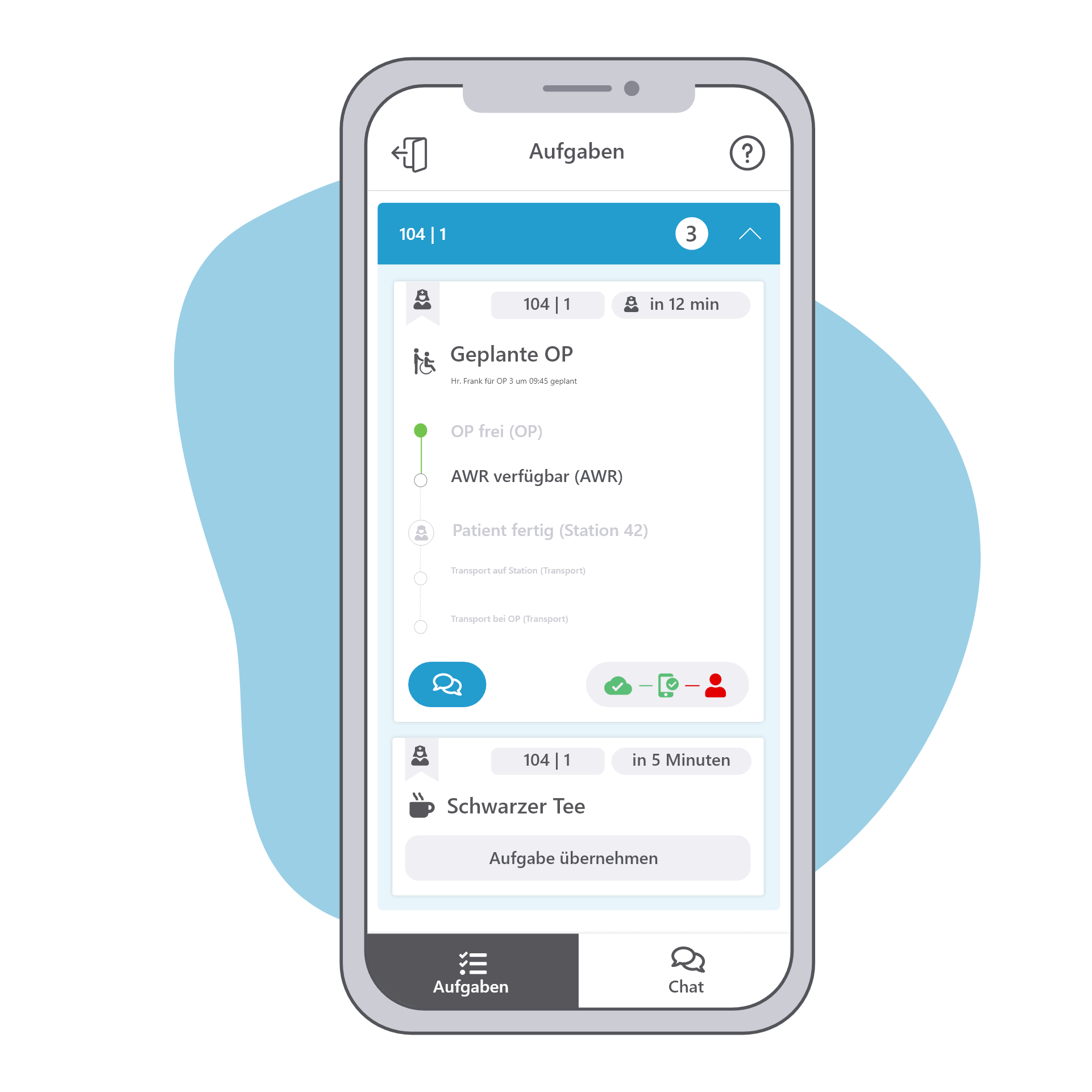
Objective: By digitally mapping process workflows through Cliniserve, the right employee receives a corresponding push notification at the right time when a task is assigned to them. If necessary, all other process participants can transparently see which step of the process the respective task is currently in. This breaks down communication silos and enables more efficient process execution.
Example: Process chains for targeted task allocation in the preoperative area
Task Allocation Within Process Chains
2. Standardization of Workflows
Method: Nurses must handle a wide range of tasks in their daily ward work and are constantly faced with unpredictable demands. Tasks can easily be overlooked; however, if these tasks are relevant to billing, a task that goes undone can quickly cost the hospital a lot of money.
Objective: The “scheduled tasks” feature in Cliniserve CARE helps ensure that particularly important, easily overlooked, or high-reimbursement procedures are not forgotten.
Example: Each hospital can specify which tasks should be included in reminders, what labels the reminders should have, and when and at what intervals they should appear (example tasks: “Classify PPR in the HIS”).
Task Reminder Feature
3. Customer- and patient-centricity (Lean: "customer value")
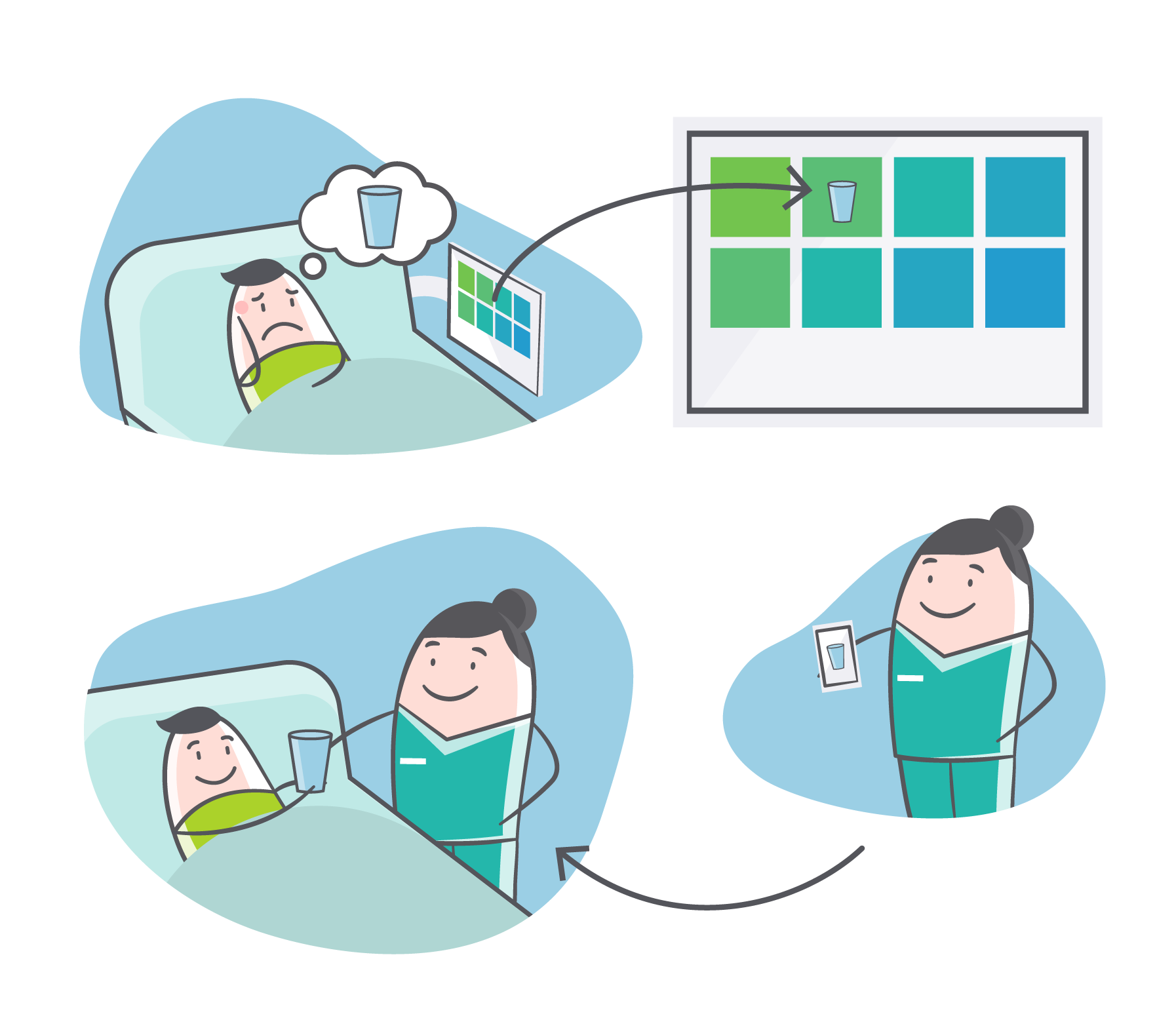
Method: Nurses have less and less time for direct patient care because they must take on a wide range of tasks as part of their daily ward routine (e.g., running errands or performing non-nursing tasks). Through digital patient communication, patients can actively and specifically communicate their needs (e.g., “headache” or “water”).
Goal: By accurately assigning patient requests (e.g., housekeeping brings water, and licensed nurses address pain-related requests), the nursing staff will have more time to focus on actual patient care. In addition, urgent requests can be prioritized more effectively, and “flash messages” can provide greater transparency for patients should something come up unexpectedly.
Example: A request for a glass of water or a new IV, which patients initiate through the digital interface rather than using the emergency call button.
Precise Routing of Patient Inquiries
4. Employee Engagement & Change Management
Method: The combination of lean management and change management integrates efficient process optimization with the active, human-centered involvement of employees to ensure the long-term success of transformations. Cliniserve applies this principle by assigning a dedicated contact person to each hospital to provide guidance on change management.
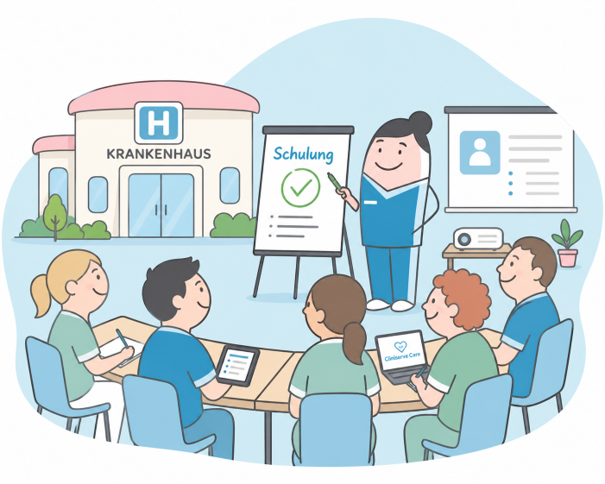
Goal: The point of contact not only assists at the start of the project by configuring the solution to meet the hospital’s specific needs, but also visits the site to train users in person. Even after that, we rely on regular review meetings to identify opportunities and challenges.
Example: In-person training for employees at the start of the project
Employee Training at the Start of the Project
Conclusion:
Cliniserve CARE supports lean management in hospitals through process analysis, standardization, patient-centered communication, and employee involvement. This reduces waste, makes processes more efficient, and improves quality—without placing an additional burden on staff. As a result, lean is not just a concept but can be put into practice profitably through Cliniserve.







.png)
